A FINISHED BOOK
A Bright Name
The life of Kim Mi-young. She was born in 1948 on Yeongdo in Busan, went into a textile mill at fifteen, and later moved to America with three children and opened a store. The book came out of eleven conversations with Keeper.
13 chapters, 86 pages. 5 of the chapters can be read here from start to finish, 22 pages of them.
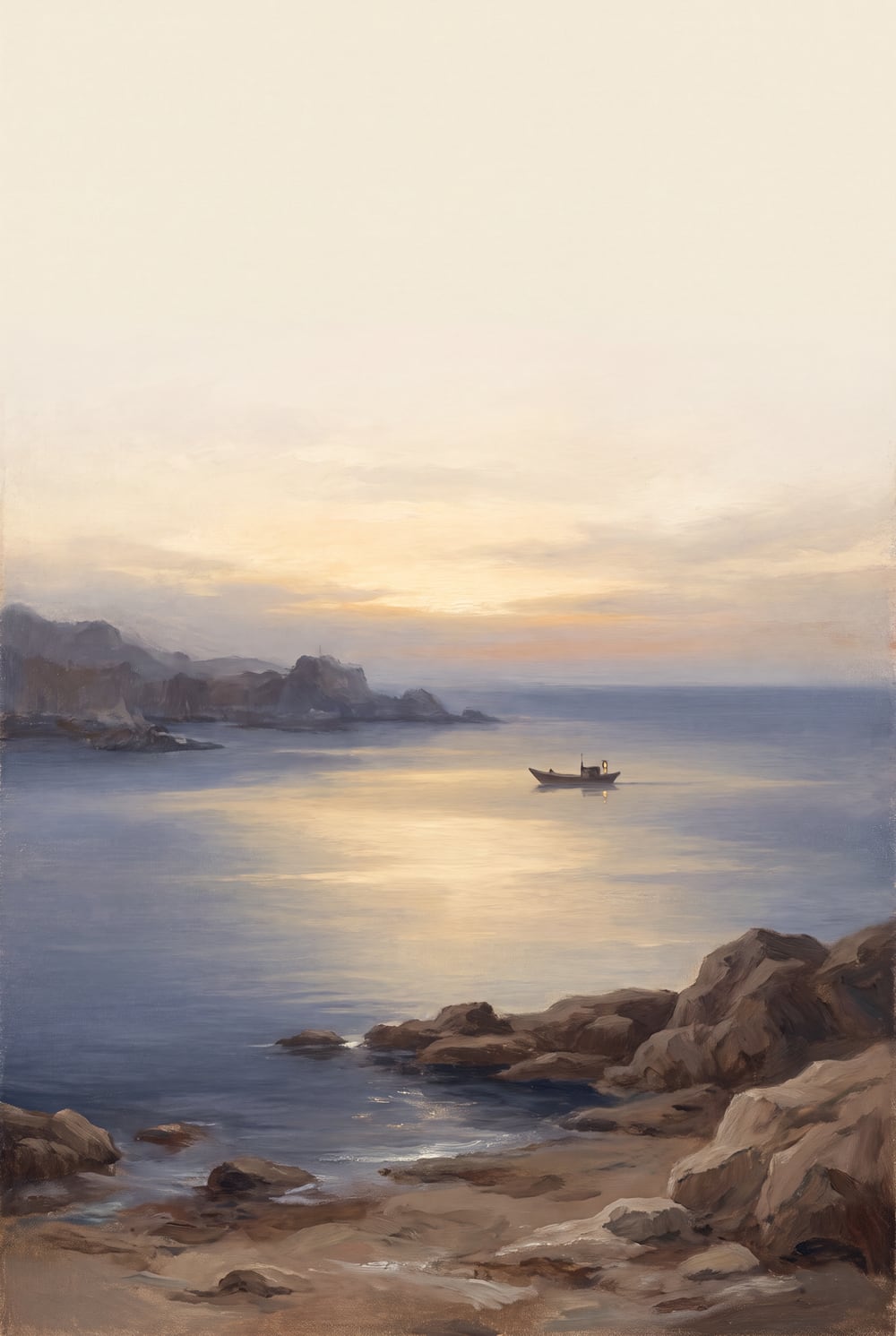
The Light in a Name
Kim Mi-young
- Prologue
- Roots and Family
- Tidal Flats and the Wooden Platform
- School Days
- First Earnings
- Love and Marriage
- To a New Country
- Work and Livelihood
- Building a Home
- Overcoming Hurdles
- Wisdom and Faith
- Life's Joys
- Epilogue
The five chapters marked ❦ can be read here in full.
Prologue
My youngest daughter, Mi-gyeong, asked me to tell the story of my life so the family could keep it for a long time. Hearing her voice over the phone, I felt at a loss for what to say. I hesitated for a long while, thinking, what grand story could my life possibly hold? I only ever endured and lived, taking each day as it came. My life was nothing special compared to others. But the thought that my family wanted to hear my story made old pictures, buried in a very deep place, begin to rise to the surface, one by one.
I saw the faint light of the kitchen during the time we called boritgogae, the lean weeks before the barley ripened, when our whole family satisfied our hunger with a single bowl of watery porridge. The biting dawn air of my childhood days, walking the ten-ri road to school with a friend over the frozen ground, brushed against my cheeks. I remembered the rough, warm hands of my father, a man of few words. The white thread dust of the Busan textile factory at fifteen, where the sound of machines was deafening, felt sharp in my nose. I recalled my friends' lunchboxes steaming on the briquette stove in the middle of the classroom. And the quiet hand of that man, silently adding three spoonfuls of sugar to my coffee in the Nampo-dong teahouse.
My name is Kim Mi-young. My father gave me that name with the character for 'bright' (yeong), hoping I would grow up bright and radiant like my name. I suppose my life was the path I walked trying not to let that light go out. Naming the cleaners 'Sunshine' after coming to a strange land was also because I wanted to carry on that meaning. I used to think my life was insignificant, but looking back, perhaps it was because of that name that I found the strength to get back up every time I stumbled. This story begins on the day I received that shining name as a gift. For my daughter, and for my children’s children, I now slowly draw up a lifetime of stories from the well of my memory.
First Earnings
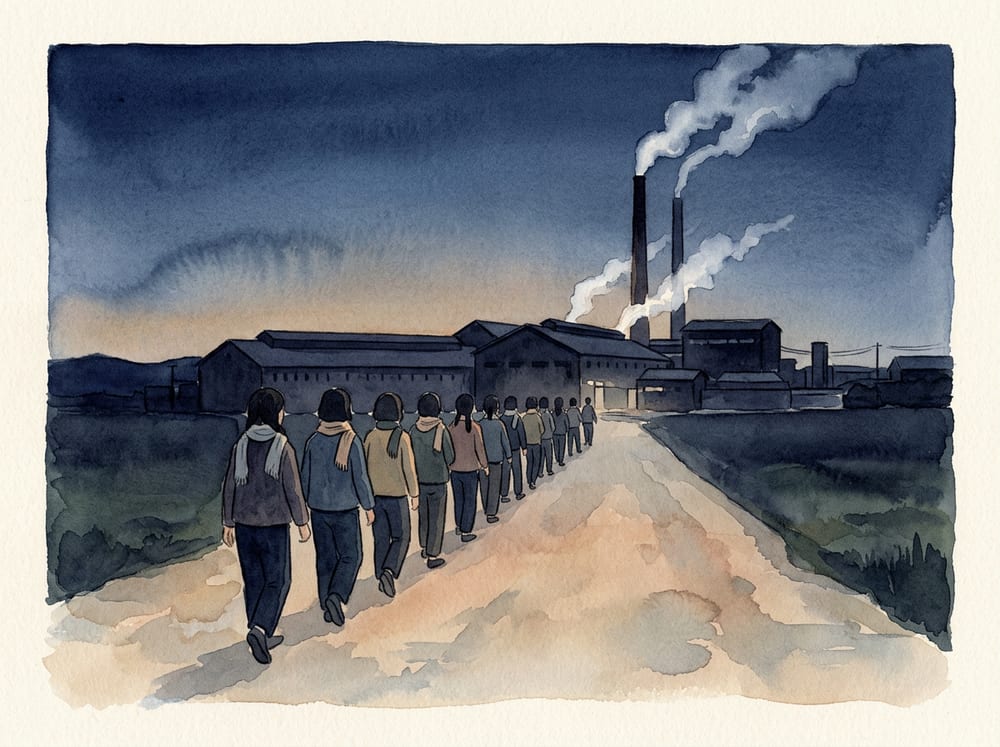
At fifteen, I left home and went to work at a large textile factory in Busan. The dormitory bell would ring at five-thirty in the morning, and we would rush out after just splashing our faces with cold water. It was still dark outside, but the first thing we saw was the white steam pouring from the factory chimney. The area was called ‘Jobang-ap,’ and though the savory smell of pull-bbang, a type of pastry, filled the main street, I could only smell it as I walked past, saving my money. Hundreds of girls like me walked in a silent line, only the sound of our footsteps on the dark road. Inside the factory, the roar of the machines was deafening, and cotton dust fell like snow. After half a day, our hair and eyebrows would be white. We’d look at each other and laugh, saying, ‘You look like a grandma now,’ and since we couldn't hear each other speak, we talked with hand gestures.
In the dormitory, I shared a room with Jeong-mi, who was from Gimhae. She was a year older than me. On payday, she would always buy a bag of beondegi (boiled silkworm pupae) from a cart in front of the factory and give me half, still in its newspaper cone. I clearly remember savoring each warm, salty piece. I was too young then to know what jeong, a deep feeling of connection, was, but thinking back, that was it. When the lights went out at nine o’clock, we would hide under the covers and sing in voices as quiet as mosquitoes. We were nervous about the dorm mother catching us, but as Jeong-mi taught me songs like ‘Dongbaek Agassi’ and ‘Seommaeul Seonsaengnim,’ it felt like the ringing in my ears from the day’s machine noise would slowly fade away.
The day I received my first paycheck, I don't know how many times I took out the yellow envelope on the way back to the dormitory to look at my name, ‘Kim Mi-young,’ written on it. It was the first money I had ever earned with my own hands. With that money, the very first thing I bought was a pair of rubber shoes for my mother. She just looked at them for a long time without a word. I can never forget that sight. But then, saying they were too precious to wear, she wrapped them carefully in newspaper and stored them in the bottom of the wardrobe in the warmest part of the room. She only took them out to wear to the temple on the first day of the month or on holidays; for walking around the neighborhood, she wore her old shoes. Even when I said, “Mother, I bought them for you to wear,” she would only reply, “Oh, how can I wear something so precious?”
After work, I attended a yahak, a night school, held at a nearby church. A university student teacher taught us, writing letters on the blackboard with a brush, and I would wet the tip of my mongdangyeonpil, a little pencil stub, with my tongue to copy ‘A, B, C’ into my notebook. Ah, this is how much I love to study, I realized for the first time then. But I could not attend for long. When export orders piled up, we had to work overtime until ten or eleven at night. I think I quit after about three months. On my last day, the teacher said, “Come again,” but knowing I wouldn’t be able to, I couldn’t bring myself to answer. I never even got to ask his name.
At some point, Jeong-mi developed a constant cough. Everyone said it was because of the cotton dust. Finally, one autumn day, she packed her things to go back to her hometown of Gimhae. In the dormitory courtyard, she held my hand tightly and said, “Mi-young-ah, make sure you eat well.” Her hand felt so light. A few letters went back and forth. I would send a reply, and another would come, and then one day, they just stopped. There was no way to find out what happened. I have decided to believe, even now, that Jeong-mi went home, got married, had sons and daughters, and lived a good life.
Overcoming Hurdles
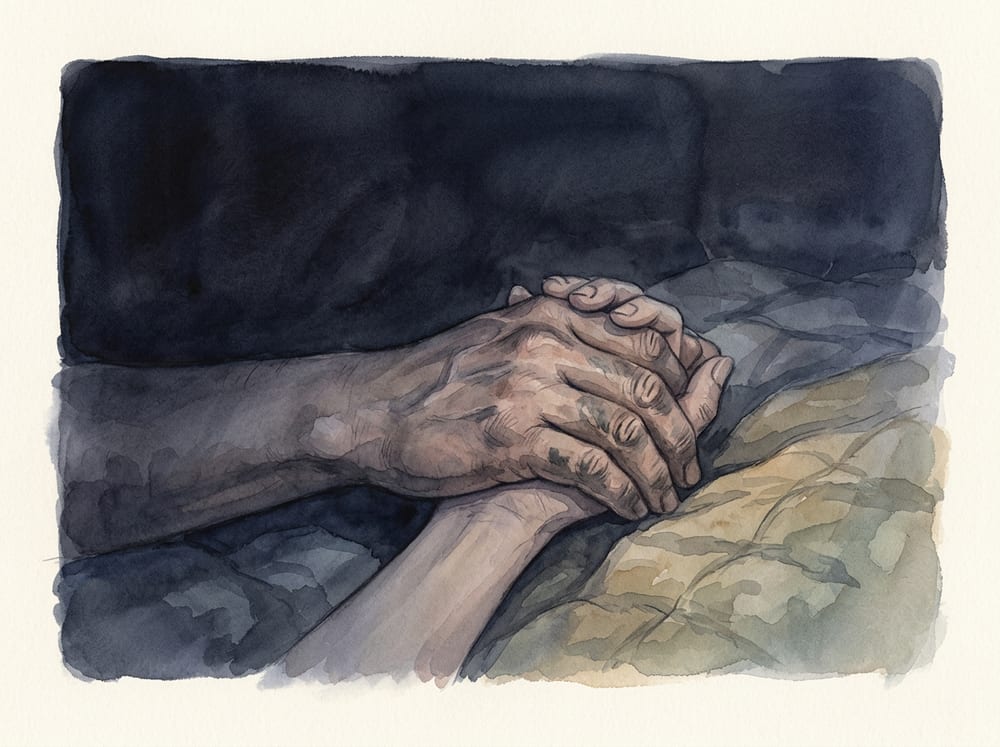
It must have been our second year running the market. It was near closing time when a young man came in and shoved a gun over the counter. He couldn't have been more than twenty, and the hand holding the gun was trembling. Before I could feel scared, I saw my children’s faces. My own hands were trembling more, so I had trouble opening the register. That night, my husband said nothing. He just picked his spoon up and put it down at the dinner table. After we turned out the lights and lay down, he took my hand in the darkness. He held it tight all night with his rough, oil-stained hands and didn't let go. The tears I hadn't shed in front of the gun finally came then. A quiet man speaks that way, with his hands. In the morning, he said just one thing: “I’ll go with you today.” And for a whole month after that, he came and sat in the store every evening.
We opened the next morning, of course. What choice did we have? Still, for a while after, my heart would drop every time the bell on the door jingled. The following Sunday, my husband brought home a bundle of iron bars from somewhere. With the skill he had from the forge in Yeongdo, he spent all day welding grates onto the store windows. The blue flame and the smell of burning metal… it smelled of Yeongdo for the first time in a long while. It may have looked unsightly to others, but to me, those bars were his heart. We left them on until the day we sold the store.
He collapsed suddenly and left first, in 2015. I had to send him off without even getting to properly hold his hand. The day of the funeral is strangely hazy. They say many people came, but it’s all a blur. I only remember a few things. My composed son, Seong-ho, his shoulders shaking in front of the casket. My sister-in-law, Soon-hee, clutching my hand and calling only her brother’s name, “Dae-su, Dae-su.” And my fifteen-year-old grandson, Jun, the sleeves of the first black suit he’d ever worn too short, exposing his bare wrists. For some reason, I couldn’t get that image out of my mind. Mi-gyeong stayed and slept beside me for a few nights. The first night after she went back to her own home, that was the real beginning.
His brown shoes, the ones he always wore, were still in the entryway. The worn-toed shoes, placed neatly… the person was gone, but the shoes were still waiting for their owner. I couldn’t bring myself to move them, so they stayed there for months. Every morning as I passed the entryway, I would greet them with my eyes. It’s funny, isn’t it, greeting a pair of shoes. But back then, that was my place to say hello. The sound of his humming that always filled the house was gone, and only the hum of the refrigerator remained. For a while, I lived with the TV on from morning till night, not even watching it. I needed to hear a human voice to be able to swallow my food.
The church held me up. I endured one year, then two, by attending early morning prayer. Deaconess Lee would call from downstairs at five in the morning. “Deaconess, come on down,” she’d say in her Busan accent. We didn’t say much in the car, driving on the dark, early morning roads. There was only the sound of the heater fan. But those silent fifteen minutes saved me. For the first three months, no prayers would come, so I would just go and sit, with the sound of others’ prayers like a screen around me. Then one day, words finally came from my own mouth. “God, I am here.” With that one sentence, I could breathe again.
For nearly forty years, my husband had handled all the banking. After he was gone, there was something I had to go for. The night before, I stood in the kitchen and read the English sentences my daughter Eun-ju had written for me over and over. “I would like to…” My tongue kept stumbling over the words. My hand was shaking at the counter, but the teller waited patiently. When I signed the papers and walked out of the bank, the sun was incredibly bright. I cried a little in the car in the parking lot. Not because I was sad, but because I felt, I did it. I found myself living on. That was enough.
Life's Joys
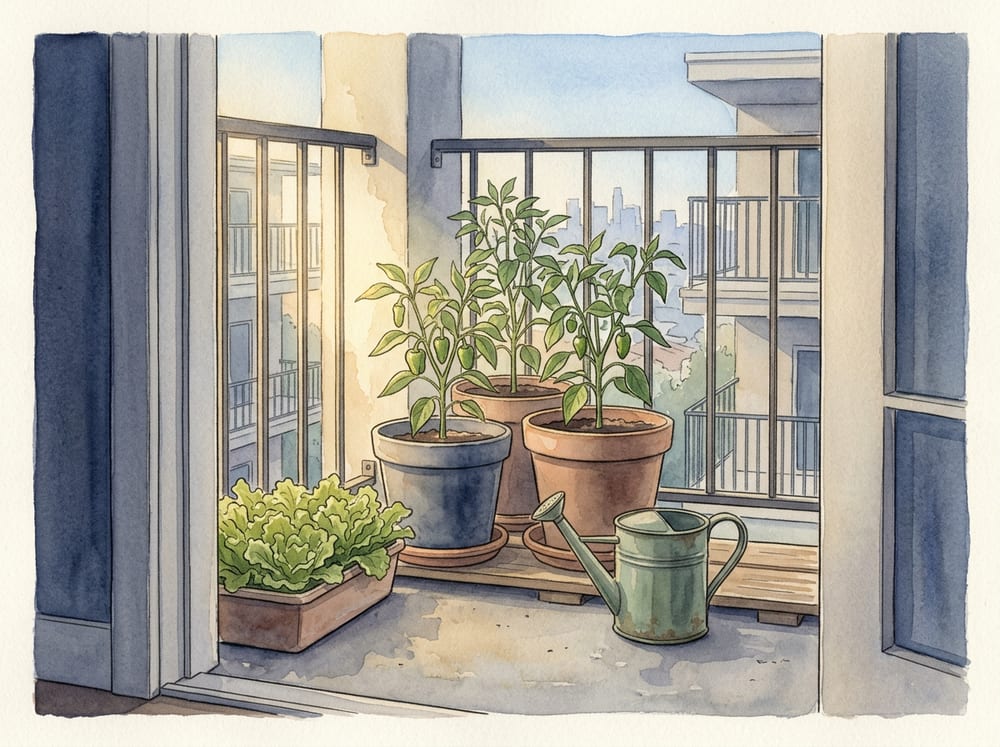
These days, I grow peppers and lettuce on my veranda. The habit from the store is still in my body, so my eyes open at six o'clock, and the first thing I do when I get up is water the pots. When I touch the soil, my heart feels so at peace. My father, who lived his whole life looking at the sea, was a man of the sea, but I love the soil, which is a curious thing. In June, when the first eight peppers appeared on the seedlings I planted in March, I couldn't bring myself to pick them for three days because they were too precious. I just looked at them. When I finally picked them, I took half to Mrs. Kwon, and she teased me, saying I had become a real farmer. That evening, I ate those peppers dipped in soybean paste, and they were so spicy and sweet. The veranda lettuce belongs to my youngest, Mi-gyeong, who comes every Saturday.
Just the sound of my grandchildren calling 'Halmeoni' over the phone is enough to brighten my entire day. Seong-ho's daughter, Lily, lives in San Jose. Last week, she video-called, and the moment the screen turned on, she shouted 'Halmeoni!' so loudly I almost dropped the phone. It's the only Korean she knows, but I think she says it with more warmth than anyone in the world. Eun-ju's son, James, now asks in Korean when he calls, 'Halmeoni, jinji japsusyeosseoyo? (Grandma, have you had your meal?)' Thanks to him, I'm finally playing the part of a teacher. He's taking a Korean class at his university and calls with his homework, asking about one word after another. My elementary school teacher told me I should study more, but I couldn't. Now, my grandson calls to learn Korean from me. Once, he called me first thing to tell me he did well on a test.
One time, James asked me what the word 'geuripda' meant. He asked how it was different from 'bogosipda,' which means 'I want to see you.' I thought for a long moment and then explained it this way. 'Bogosipda' is when you want to see a person's face, but 'geuripda' is when you wish the entire time you spent with that person could come back whole. I don't know what the dictionary says, but that was the only way I could explain it. The other end of the line was quiet for a while, and then James said, 'Halmeoni, then I think I miss Korea. Even though I've never been there.' Those words stayed in my heart for several days.
On Thanksgiving, my granddaughter Sofia came and took the eungarakji, a silver ring, from my drawer to try it on. It's the very ring my mother pressed into my hand at Gimpo Airport as I was leaving for America. 'Grandma, this is so pretty,' she said, slipping it on her finger. As I looked at her young hand, my own mother's rough hand seemed to overlap it. So I told her, 'I'll give it to you when you get married.' She laughed and said she wanted it even if she doesn't get married. I feel at peace, knowing the ring has a place to go. The song 'Hometown Spring,' which my husband hummed his whole life, also has a place to go now. James asked me to teach him a Korean song, so I sang it to him over the phone. His clumsy voice following along, saying 'Kkochi pineun sankkol,' sounded so beautiful.
On Wednesdays, I have lunch with the other church kwonsa-nims, the senior deaconesses. The menu is always set: either soft tofu stew or knife-cut noodle soup. Mrs. Lee always orders an extra-large portion of noodles and leaves half of it, and we laugh about that for thirty minutes. I don't know what's so funny about such simple things, but when the three of us old women get together and laugh, it feels like we light up the whole restaurant. On our way home, each of us is carrying a bag of side dishes the others have packed for her. I wake in the morning and touch the soil, laugh with friends in the afternoon, and hear my grandchildren's voices in the evening. For this, I am truly grateful.
Epilogue
After unwrapping my story for my daughter over eleven sittings, the memories that had settled like stones at the bottom of a deep well inside my heart seem to be rising up, clear. If not for Mi-gyeong, they were faces and moments that would have stayed buried just as they were. When her voice saying, “Eomma, just tell us comfortably,” stirred the waters of the well, forgotten scenes rose up quietly. There are things I see clearly only now that I have spoken them.
I feel again the firm warmth of my husband’s hand holding mine all through the night I trembled with fear after the robbery. The image of Mrs. Johnson arriving silently with a broom to help me sweep up after the riots shattered our store’s windows is still vivid. The memory of making a hundred heads of kimchi every autumn, putting a piece in my children's mouths, is also precious. The eungarakji, a silver ring, that my mother pressed into my hand as I left will now leave my hand for my granddaughter’s. I suppose my story will continue on in that way.
Because of Mi-gyeong, I was able to look back on my life with such a calm heart. I am grateful for that, and I will be for a long time. Tracing back the days I endured under the ‘Sunshine’ sign, trying to live brightly like the name my father gave me, I see that not a single step was in vain. The hard days and the joyful days all made me who I am today. Now that I think about it, that was enough. I feel like, I made it.
A Bright Name
The Light in a Name
Eleven conversations became
one book.
Korean and English, the same book.
- Prologue
- Roots and Family
- Tidal Flats and the Wooden Platform
- School Days
- First Earnings
- Love and Marriage
- To a New Country
- Work and Livelihood
- Building a Home
- Overcoming Hurdles
- Wisdom and Faith
- Life's Joys
- Epilogue
The five chapters marked ❦ can be read here in full.
Shared with the family's agreement. Some names and details were changed.